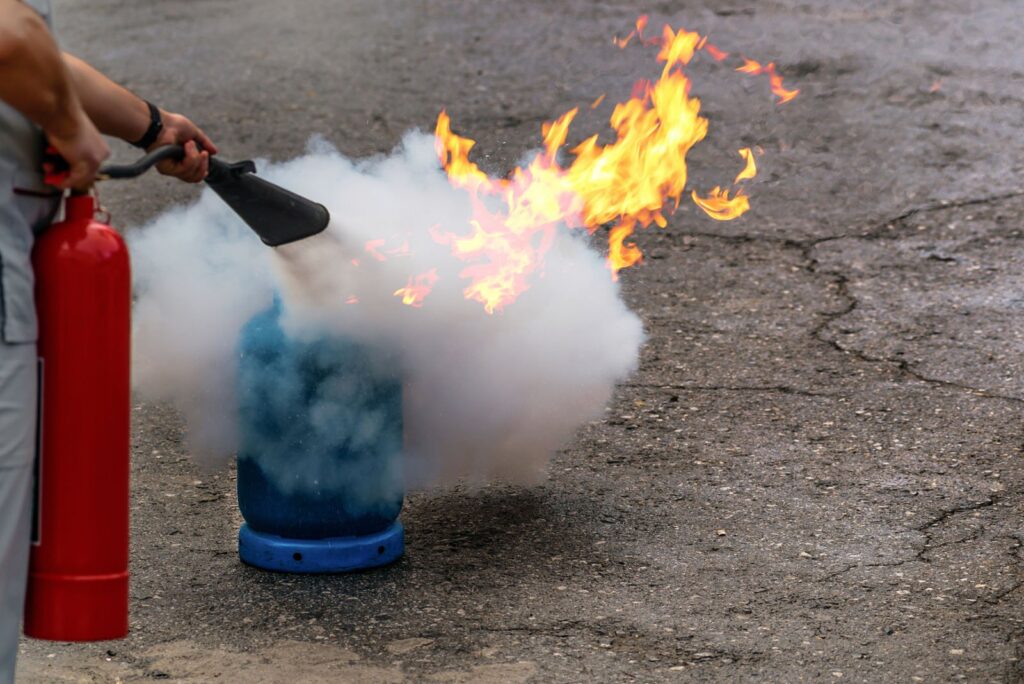
Why CO₂ Fire Extinguishers Fail in Modern Fire Scenarios
CO₂ extinguishers work by displacing oxygen, which can suppress certain types of fires. However, modern fire risks — especially lithium battery fires — do not rely on external oxygen.
Lithium battery fires generate internal oxygen
CO₂ cannot reduce internal temperature
Fire can reignite after discharge
Unsafe in confined or occupied spaces
Limited effectiveness in complex fire environments
Aerogel vs Traditional Fire Extinguishers
Test results show significant performance differences between fire suppression technologies.
Choosing the right solution directly impacts safety, equipment protection, and long-term cost.
Criteria
⭐ Aerogel
Dry Powder
Foam (AFFF)
CO₂
Water
Fire Classes
A, B, E, F
A, B, C
A, B
B, E
A
Extinguishing Speed
⚡ Seconds
Fast
Medium
Fast
Slow
Re-ignition Risk
✅ None
⚠️ Possible
❌ High
❌ High
❌ High
Electrical Safety
Up to 36kV
Residue Risk
Not Safe
Safe
Not Safe
Cooling Capability
★★★★★
★
★★★
★
★★★★
Residue
Minimal
Heavy
Moderate
None
None
Equipment Damage
None
High
Medium
None
High
Environmental Impact
Eco-friendly (REACH)
Dust Pollution
PFAS Risk
CO₂ Emission
Low
Maintenance Cost
Low
Medium
Medium
Medium
Low
CO₂ removes oxygen — aerogel eliminates heat and prevents re-ignition.
WHY AEROGEL WINS
Why Aerogel Outperforms CO₂ Fire Suppression
Traditional fire extinguishers rely on surface suppression, often failing to stop heat at its source.
Aerogel works differently — combining rapid cooling, oxygen isolation, and anti-reignition protection to stop fires completely.