Oil fires remain one of the most dangerous fire scenarios in industrial environments.
In petrochemical facilities, storage tanks, and fuel handling operations, fire suppression performance directly impacts safety, asset protection, and operational continuity.
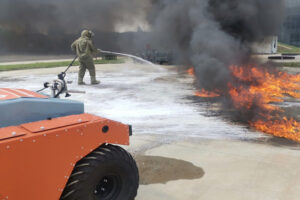
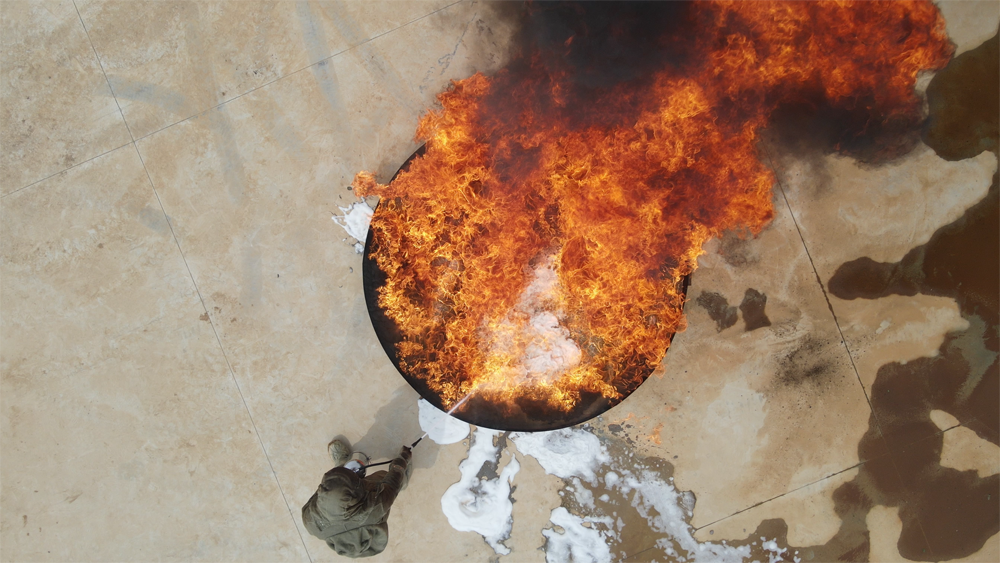
To evaluate the effectiveness of different fire suppression methods, a controlled oil fire test was conducted comparing traditional foam systems and advanced aerogel-based fire suppression.
Test Objective
The purpose of this test was to evaluate:
- Extinguishing speed
- Heat reduction capability
- Stability of suppression layer
- Re-ignition behavior
The goal is to determine which method provides reliable control in high-temperature oil fire conditions.
Test Setup
Fire Scenario:
- Fuel Type: Liquid hydrocarbon (simulated oil fire)
- Fire Area: Open surface fire
- Ignition Method: Controlled ignition system
Comparison Methods:
- Conventional foam fire suppression
- Aerogel-based fire suppression
The test was conducted under consistent environmental and operational conditions.
Test Results: Foam Fire Suppression
Observed Performance:
- Foam layer formed quickly on the surface
- Initial flame suppression achieved
However, several limitations were observed:
Key Issues:
- Foam layer degraded under high heat
- Surface coverage became unstable
- Heat remained in the fuel layer
- Re-ignition occurred after suppression
Critical Limitation
Foam primarily acts on the surface.
In high-temperature oil fires:
- Heat continues below the foam layer
- Flammable vapors are still released
- The fire can reignite once the foam breaks down
Test Results: Aerogel Fire Suppression
Aerogel-based fire suppression demonstrated a different performance profile.
Observed Performance:
- Rapid flame suppression
- Significant heat reduction
- Stable coverage over fuel surface
- No re-ignition observed
Performance Advantages
1. Superior Heat Control
The agent absorbs heat and reduces fuel temperature, addressing the root cause of combustion.
2. Stable Barrier Formation
Unlike foam, the suppression layer remains intact under high temperatures.
3. Strong Adhesion
The agent adheres to the fuel surface, preventing displacement or flow disruption.
4. Anti-Reignition Capability
A protective layer remains after suppression, preventing vapor ignition.
Comparison Summary
| Criteria | Foam System | Aerogel System |
|---|---|---|
| Extinguishing Speed | Medium | High |
| Heat Reduction | Low | High |
| Stability | Low | High |
| Re-Ignition Prevention | No | Yes |
Implications for Petrochemical Facilities
In real-world applications, these differences are critical.
Facilities such as:
- Oil storage terminals
- Refineries
- Chemical plants
- Fuel transport hubs
Require fire suppression systems that:
- Maintain stability under extreme heat
- Prevent re-ignition
- Reduce downtime and damage
Why This Matters
Temporary flame suppression is not enough in oil fire scenarios.
Without effective heat control and vapor suppression:
- Fire risks remain
- Secondary ignition is likely
- Operational losses increase
Conclusion
This test confirms that traditional foam systems have limitations in high-temperature oil fire scenarios.
Advanced fire suppression technologies provide a more reliable and effective solution.
For high-risk industrial environments, choosing the right fire suppression system is essential.
Request Fire Test Reports for Your Facility
Looking for validated fire suppression performance?
- Get detailed test reports
- Request system recommendations
- Explore customized fire protection solutions
Contact our team to learn how advanced fire suppression can protect your operations.