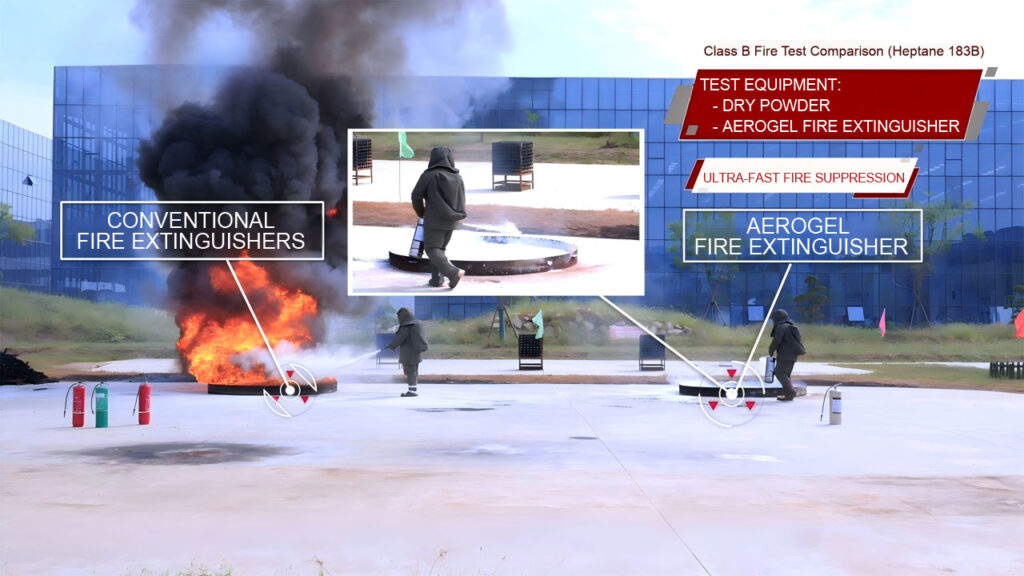
Choosing the right fire extinguisher is critical for effective fire protection.
With multiple options available — including foam, dry powder, and CO₂ — many users are unsure which solution works best for their specific fire risks.
This guide compares the most common fire extinguishers based on performance, limitations, and real-world applications.
Types of Fire Extinguishers
Each type of fire extinguisher is designed for specific fire classes and conditions.
1. Foam Fire Extinguishers
Foam extinguishers are widely used for liquid fires and industrial applications.
How it works:
- Forms a layer over the fuel surface
- Blocks oxygen
- Provides moderate cooling
Advantages:
- Effective for Class B fires
- Prevents surface ignition
Limitations:
- Breaks down under high temperatures
- Limited durability in dynamic environments
- Cannot prevent re-ignition in many cases
2. Dry Powder Fire Extinguishers
Dry powder extinguishers are known for their rapid flame suppression.
How it works:
- Interrupts chemical reactions in the flame
Advantages:
- Fast knockdown effect
- Works on multiple fire types
Limitations:
- No cooling capability
- Fire may re-ignite
- Creates visibility and cleanup issues
3. CO₂ Fire Extinguishers
CO₂ extinguishers are commonly used for electrical fires.
How it works:
- Displaces oxygen around the fire
Advantages:
- No residue
- Safe for electrical equipment
Limitations:
- No cooling effect
- Limited effectiveness in open environments
- Short discharge duration
Performance Comparison
| Criteria | Foam | Dry Powder | CO₂ |
|---|---|---|---|
| Cooling Ability | Medium | Low | Low |
| Flame Suppression | Medium | High | Medium |
| Re-Ignition Control | Low | Low | Low |
| Residue | Medium | High | None |
| Application Range | Medium | High | Medium |
The Key Limitation of Traditional Extinguishers
All three traditional solutions share a critical limitation:
They address only part of the fire suppression process.
- Foam → surface coverage
- Dry powder → flame interruption
- CO₂ → oxygen displacement
None of them effectively:
- Reduce internal temperature
- Stop ongoing reactions
- Prevent re-ignition
What Actually Works in Modern Fire Scenarios
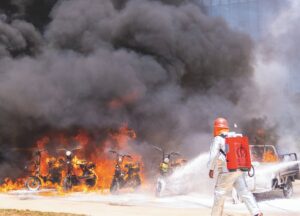
In advanced fire scenarios — such as lithium battery fires and high-temperature oil fires — a more comprehensive solution is required.
An effective fire suppression system must provide:
- Rapid cooling
- Stable coverage
- Long-lasting protection
Advanced Fire Suppression Solutions
New-generation fire suppression technologies combine multiple mechanisms in one system.
Compared to traditional extinguishers, they offer:
- Faster extinguishing
- Better heat control
- Improved safety
These solutions are increasingly used in:
- Industrial facilities
- Energy storage systems
- Petrochemical environments
How to Choose the Right Fire Extinguisher
When selecting a fire extinguisher, consider:
Fire Type
- Liquid fuel
- Electrical
- Battery-related
Environment
- Indoor vs outdoor
- Confined vs open space
Risk Level
- Low-risk vs high-risk environments
Conclusion
Foam, dry powder, and CO₂ extinguishers each have their place in fire protection.
However, for modern fire risks, they often fall short of providing complete protection.
Understanding their limitations is essential for making the right decision.
Need Help Choosing the Right Fire Protection Solution?
- Get expert recommendations
- Compare fire suppression options
- Request technical data
Contact our team to find the best fire protection solution for your application.