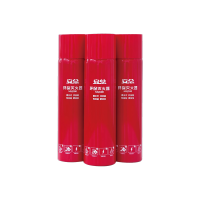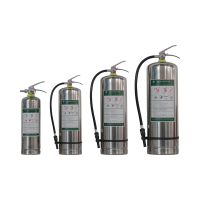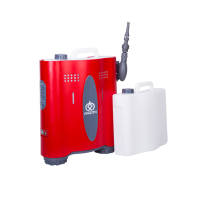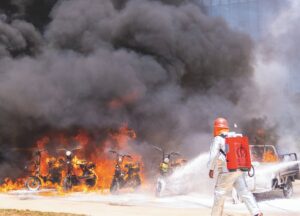
As fire risks become more complex — especially in lithium battery systems, petrochemical environments, and industrial facilities — traditional fire extinguishing methods are no longer sufficient.
To address these challenges, new fire suppression technologies have been developed to provide faster, safer, and more reliable protection.
One of the most promising innovations is aerogel-based fire suppression.
This article explains how it works and why it represents a new approach to fire control.
What Is Aerogel Fire Suppression?
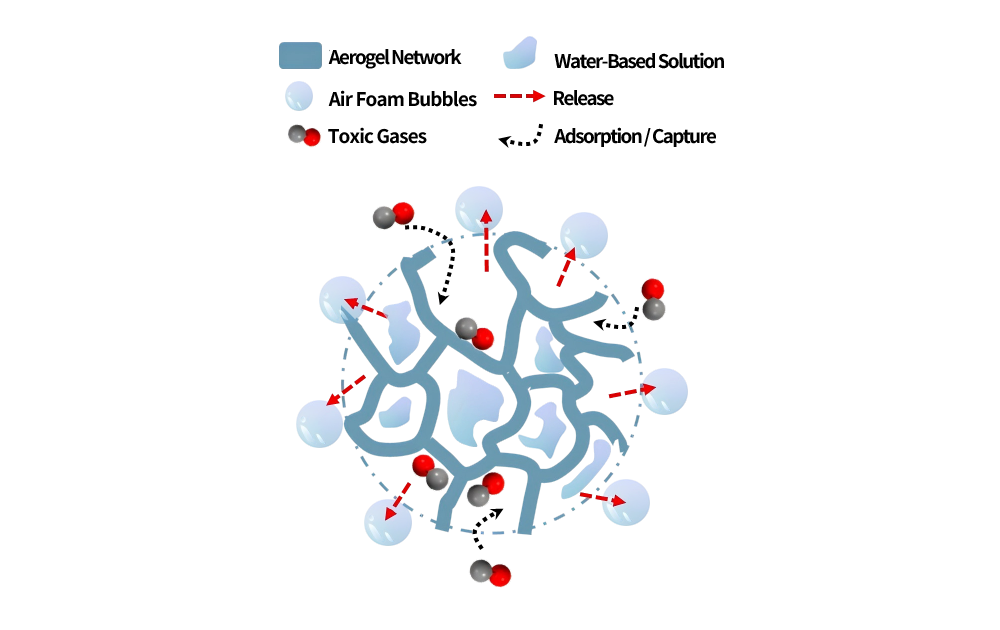
Aerogel fire suppression is an advanced fire protection technology that uses a three-phase extinguishing agent composed of solid, liquid, and gas components.
Unlike traditional agents, it combines:
- Heat absorption
- Surface coverage
- Structural stability
This allows it to address not only visible flames, but also the underlying causes of fire.
The Core Mechanism: Three-Stage Fire Suppression
Aerogel fire suppression works through a combined mechanism designed to control fire at its source.
1. Rapid Heat Absorption
When applied to a fire, the agent quickly absorbs heat and reduces the temperature of the burning material.
This is critical because:
- Fire intensity is directly linked to temperature
- High temperatures sustain combustion
- Cooling slows down or stops the reaction
In battery fires, this helps reduce thermal runaway.
2. Oxygen Isolation
As the agent interacts with heat, it forms a dense, stable layer over the burning surface.
This layer:
- Blocks oxygen from reaching the fuel
- Prevents further combustion
- Remains stable even under high temperatures
Unlike traditional foam, this barrier does not break down easily.
3. Anti-Reignition Protection
After the fire is extinguished, the aerogel forms a protective structure that remains on the surface.
This prevents:
- Re-ignition from residual heat
- Release of flammable vapors
- Secondary fire events
This is one of the most critical advantages in high-risk environments.
Why Traditional Methods Are No Longer Enough
Conventional fire extinguishing methods typically address only one aspect of fire suppression.
For example:
- Dry powder suppresses flames but does not cool
- CO₂ removes oxygen but cannot stop internal reactions
- Foam provides coverage but lacks long-term stability
As a result, fires may re-ignite or continue internally.
Modern fire risks require a more comprehensive approach.
Key Advantages of Aerogel Fire Suppression
Compared to traditional solutions, aerogel-based systems offer:
High Efficiency
- Faster extinguishing time
- Lower agent consumption
Strong Stability
- Maintains structure under high temperatures
- Resistant to breakdown
Multi-Fire Compatibility
- Suitable for A, B, E, and lithium battery fires
Environmental Safety
- Non-toxic and environmentally friendly
- Reduced secondary damage
Where This Technology Is Used
Aerogel fire suppression is increasingly applied in:
- Battery Energy Storage Systems (BESS)
- EV charging infrastructure
- Petrochemical facilities
- Industrial plants
- Data centers
These environments require reliable fire suppression with minimal downtime.
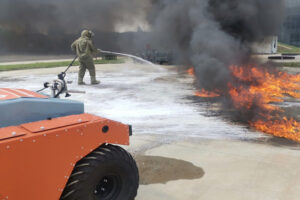
Real-World Performance
In controlled fire tests, aerogel fire suppression has demonstrated:
- Rapid extinguishing within minutes
- Effective temperature reduction
- No re-ignition after suppression
This makes it particularly suitable for high-risk fire scenarios.
Conclusion
Fire protection is evolving.
As fire risks become more complex, solutions must go beyond traditional methods.
Aerogel fire suppression provides a more complete approach by combining cooling, oxygen isolation, and re-ignition prevention.
For modern industrial environments, this represents a significant step forward in fire safety.
Explore Advanced Fire Suppression Solutions
Looking for a more effective fire protection system?
- Request technical specifications
- Get application-specific recommendations
- Learn how to upgrade your fire safety strategy
Contact our team to explore aerogel-based fire suppression solutions.