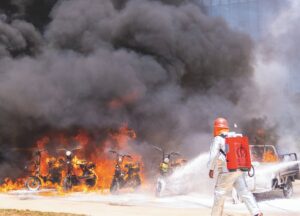
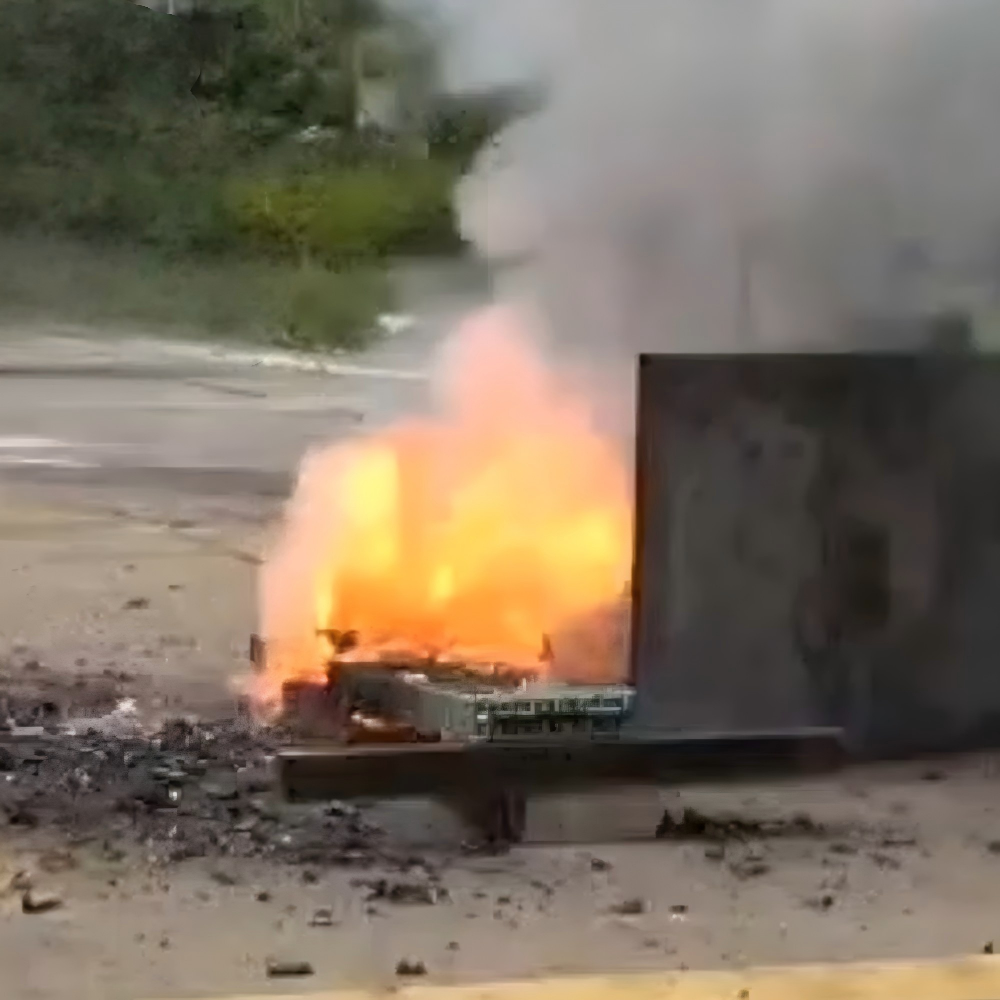
Lithium battery fires are one of the fastest-growing fire risks across modern industries.
From EV charging stations to battery energy storage systems (BESS), these fires behave fundamentally differently from conventional fires — and in many cases, traditional fire extinguishers fail to stop them.
Understanding why they fail — and what actually works — is critical for improving fire safety and reducing catastrophic losses.
Why Lithium Battery Fires Are So Dangerous
Unlike conventional fires, lithium battery fires are driven by a process known as thermal runaway.
When a battery cell overheats, it triggers a chain reaction:
- Internal temperature rises rapidly
- Flammable gases are released
- Adjacent cells ignite in sequence
This creates a self-sustaining fire that does not rely entirely on external oxygen.
As a result:
- Fires can reignite even after being extinguished
- Heat continues to build internally
- Traditional suppression methods become ineffective
Why Traditional Fire Extinguishers Fail
Most conventional fire extinguishers are not designed for lithium battery fires.
Foam Extinguishers
Foam can cover the surface of a fire, but it cannot penetrate into battery cells or stop internal reactions.
CO₂ Extinguishers
CO₂ removes oxygen from the surrounding environment, but lithium batteries can continue burning without external oxygen.
Dry Powder Extinguishers
Dry powder suppresses flames quickly, but it provides no cooling effect — allowing thermal runaway to continue.
The Result
In many real-world cases:
- Fires appear to be extinguished temporarily
- Internal reactions continue
- Re-ignition occurs minutes or even hours later
This is one of the biggest safety risks in energy storage and EV infrastructure today.
What Actually Works: Aerogel-Based Fire Suppression
To effectively suppress lithium battery fires, a solution must address all three critical factors:
- Rapid cooling
- Oxygen isolation
- Prevention of re-ignition
Aerogel-based fire suppression technology achieves this through a unique three-phase mechanism:
1. Rapid Cooling
The agent quickly reduces both surface and internal temperatures, slowing down thermal runaway.
2. Oxygen Isolation
It forms a dense, heat-resistant barrier that isolates the fuel from oxygen.
3. Anti-Reignition Protection
Unlike traditional agents, it creates a stable protective layer that prevents the fire from reigniting.
Verified Fire Test Performance
In controlled fire tests, aerogel-based extinguishing agents have demonstrated:
- Extinguishing lithium battery fires in ≤ 2 minutes
- No re-ignition after suppression
- Significant reduction in smoke and toxic gas release
These results indicate a fundamental improvement over traditional suppression methods.
Where This Solution Is Used
Aerogel fire suppression is increasingly applied in high-risk environments, including:
- Battery Energy Storage Systems (BESS)
- EV charging stations
- Data centers and power infrastructure
- Industrial battery applications
As lithium battery usage continues to grow, advanced suppression technologies are becoming essential.
Conclusion
Lithium battery fires cannot be effectively managed using traditional fire extinguishers alone.
Without proper cooling and anti-reignition capability, the risk of fire recurrence remains high.
For industries relying on battery systems, adopting advanced fire suppression solutions is no longer optional — it is critical for safety, compliance, and operational continuity.
Need a Reliable Fire Protection Solution?
If you’re working with lithium battery systems and looking for a safer, more effective fire suppression approach:
- Request detailed fire test reports
- Get expert recommendations for your application
- Explore customized fire protection solutions
Contact our team to learn how aerogel-based fire suppression can improve safety in your facility.