In many fire incidents, extinguishing the flames is only the first step.
A more critical challenge remains: preventing the fire from reigniting.
Re-ignition is one of the most common causes of fire escalation, secondary damage, and operational downtime — especially in high-risk environments such as lithium battery systems and petrochemical facilities.
This article presents real fire test insights focusing on one key question:
How can fire suppression systems effectively prevent re-ignition?
Why Re-Ignition Happens
Even after flames are extinguished, several risk factors remain:
- Residual heat within materials
- Ongoing chemical reactions
- Release of flammable gases
In lithium battery fires, thermal runaway can continue internally.
In oil fires, fuel vapors can reignite under high temperatures.
Without proper control, fire can return within minutes — or even hours.
Limitations of Traditional Fire Suppression
Traditional fire extinguishing methods are not designed to prevent re-ignition.
Common Issues:
- Dry powder suppresses flames but does not cool
- CO₂ removes oxygen temporarily but has no lasting effect
- Foam covers the surface but breaks down under heat
As a result:
- Heat remains in the fire source
- Combustion conditions persist
- Re-ignition risk remains high
Fire Test Focus: Re-Ignition Prevention
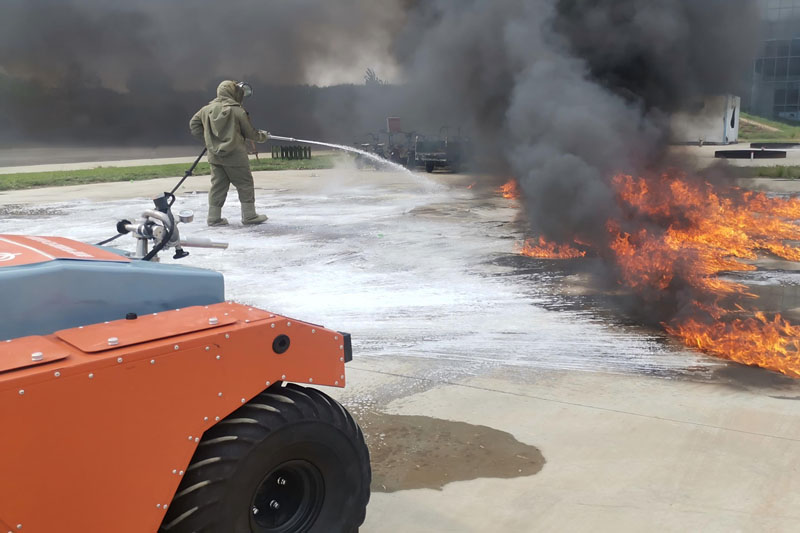
To evaluate re-ignition behavior, controlled fire tests were conducted in different scenarios:
- Lithium battery fire tests
- Liquid fuel fire tests
- Enclosed environment fire tests
The key evaluation criteria included:
- Temperature reduction
- Stability after suppression
- Time to possible re-ignition
Test Results: Traditional Methods
Across multiple test scenarios:
- Initial flame suppression was achieved
- Temperature remained elevated
- Re-ignition occurred after suppression
This confirms that traditional methods provide only temporary control.
Test Results: Aerogel Fire Suppression
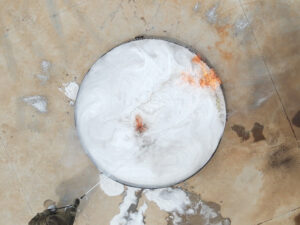
Aerogel-based fire suppression demonstrated a different outcome.
Observed Performance:
- Rapid temperature reduction
- Stable coverage after suppression
- No re-ignition observed during test period
Why Aerogel Prevents Re-Ignition
The key difference lies in its combined mechanism:
1. Deep Cooling Effect
The agent absorbs heat and reduces both surface and internal temperatures.
This eliminates the thermal energy required for re-ignition.
2. Stable Protective Layer
After application, a heat-resistant barrier remains on the surface.
This prevents oxygen and heat from reactivating combustion.
3. Vapor Suppression
The agent limits the release of flammable vapors, reducing ignition sources.
Comparison Summary
| Factor | Traditional Methods | Aerogel Technology |
|---|---|---|
| Cooling Capability | Low | High |
| Barrier Stability | Low | High |
| Vapor Control | Limited | Strong |
| Re-Ignition Prevention | No | Yes |
Real-World Impact
Preventing re-ignition is critical for:
- Battery energy storage systems (BESS)
- EV charging infrastructure
- Petrochemical facilities
- Industrial plants
Without reliable re-ignition control:
- Fire risk remains
- Equipment damage increases
- Operational downtime extends
Why This Matters for Fire Protection Strategy
Fire suppression is not only about extinguishing flames.
It must ensure that the fire cannot return.
This requires:
- Effective heat control
- Long-lasting protection
- Stability under high temperatures
Conclusion
Re-ignition is one of the most underestimated risks in fire protection.
Traditional fire extinguishing methods are not sufficient to address this challenge.
Advanced fire suppression technologies provide a more reliable solution by combining cooling, protection, and stability.
Request Verified Fire Test Data
Looking for fire suppression solutions that prevent re-ignition?
- Request detailed fire test reports
- Get application-specific recommendations
- Explore advanced fire protection systems
Contact our team to learn how to improve fire safety and prevent re-ignition in your facility.